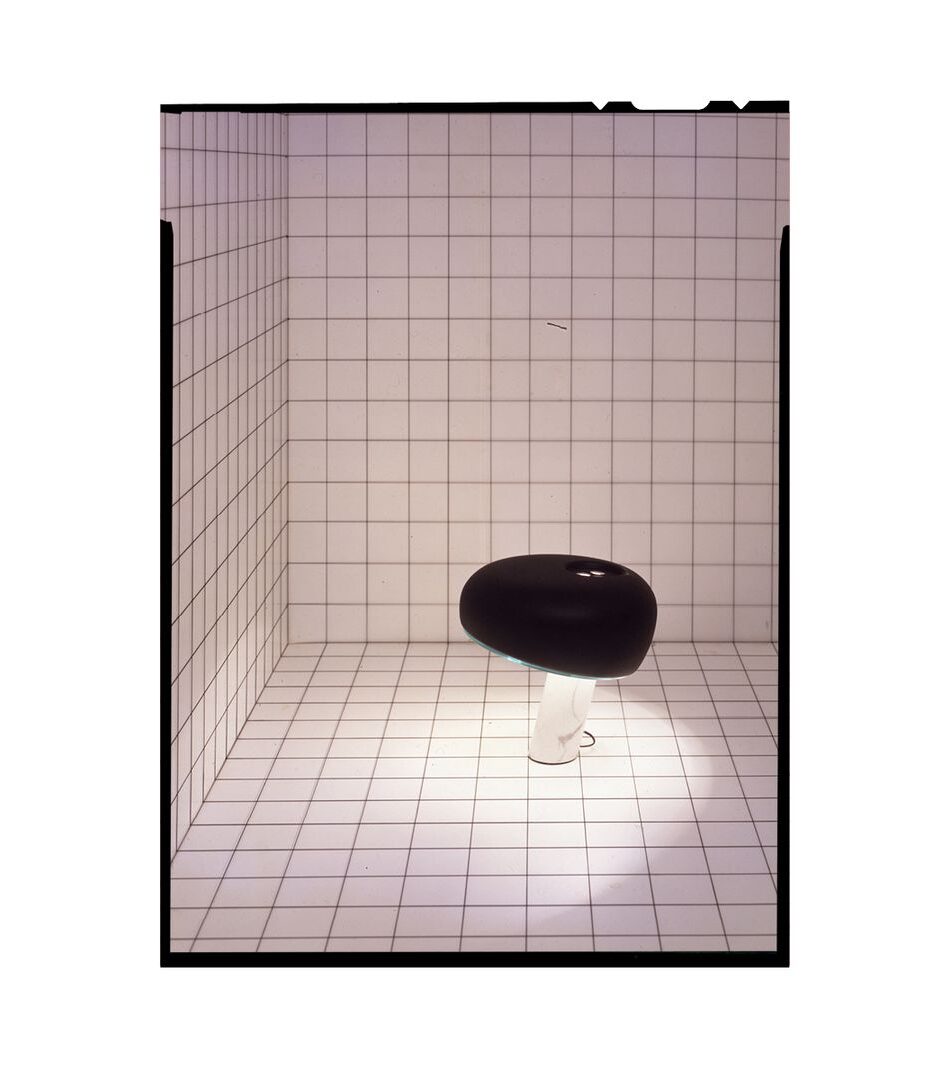
Taccia, 1962
Taccia is characterized by a totally innovative design: its shape is out of any scheme, its figure, squat but delicate, is not similar to any other lamp. The fluted steel base is reminiscent of an ancient Doric-style column and contains the light source; the body is made of aluminum painted matte black or anodized silver; the diffuser, in the original version, was designed in plastic. But the heat emitted by the light caused it to deform, so Flos decided to opt for a transparent glass diffuser with an aluminum reflector.

Toio, 1962
Toio is a mispronunciation of Toy, and the reference is to the United States, the place from which the car headlamp that characterizes this floor lamp was imported at the time. The base is in steel as is the structure made up of steel profiles painted in various available colors. The stem is made of brass with a hexagonal section and, thanks to the telescopic movement, can be adjusted in height. The overall result is a slender, austere figure, but softened by the color of both the base and the light.

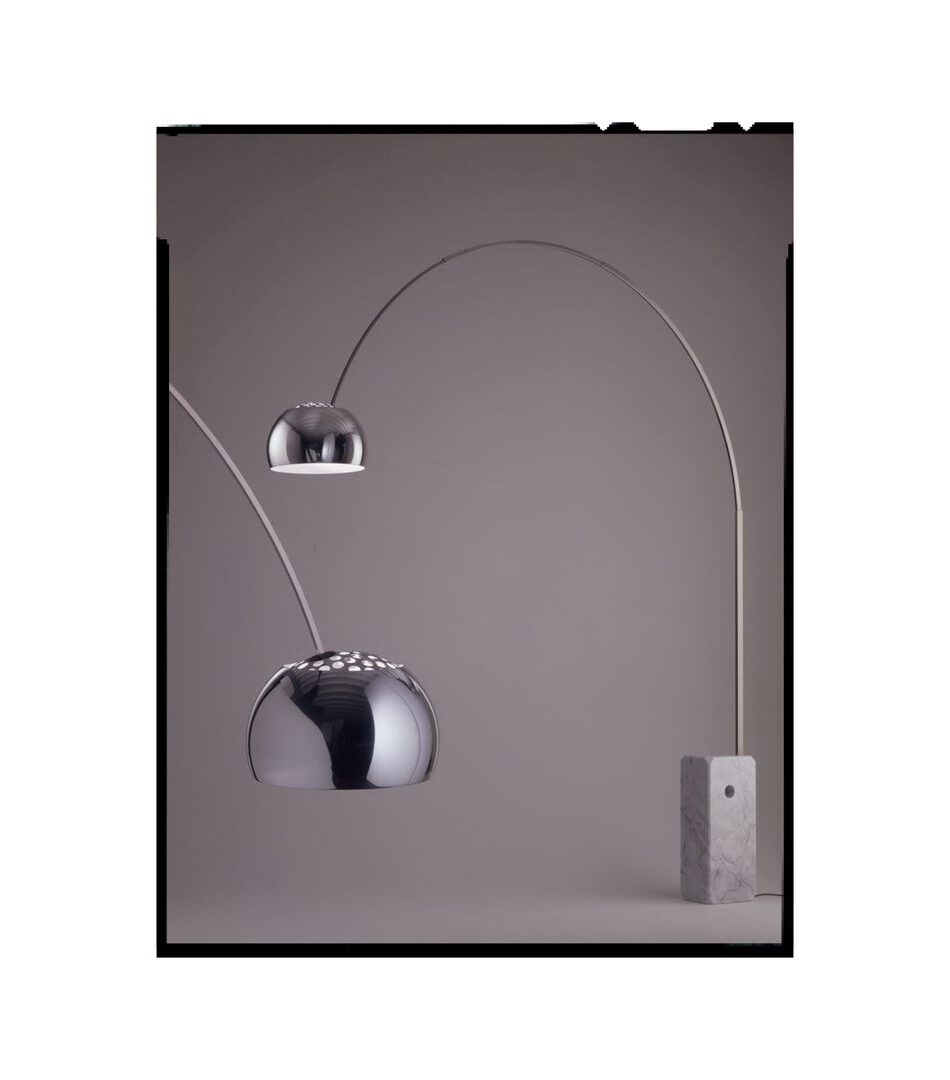
Arco, 1962
Arco was a revolution because it was the first arc lamp ever made. The intention was to have a light from above that was not a suspension, and at the time this seemed like unfeasible madness. A strong design idea was needed, especially to counterbalance the weight of the stem, which was necessary to create the height needed to bring the light from the top down. And this is where the marble base fits in: tall and narrow, so as to be heavy enough (65kg) to act as a counterweight, but not bulky. Anchored to it is the arch, telescoping for added versatility, made of stainless steel. And then there’s the swiveling, adjustable reflector made of stamped, polished, zapanned aluminum. Arco, is present in the permanent collection of the Triennale in Milan and the Moma in New York and was, in 2007, the first design project to be granted copyright and rightly so: it is, in fact, one of the most imitated.
Snoopy, 1967
We conclude with Snoopy, the table lamp designed by the Castiglioni brothers with the silhouette of the famous little dog created in the 1950s by Charles M. Schulz in mind. The playful inspiration is balanced by the choice of sober-looking materials: the Carrara marble of the base and the painted metal reflector. At the time of its design, one of the innovations it presented was the light regulator with the smallest footprint. The lamp is characterized by an asymmetry, determined by the base, oblique with respect to the top. It is a lamp that easily adapts to various environments of the house, from the living room to the bedroom.